

Fibroids can get pregnant naturally
Fibroids Treatment in Rajahmundry
Uterine fibroids are among the most common gynecological conditions affecting women during their reproductive years. These non-cancerous growths develop in or around the uterus and may vary significantly in size, number, and location. While some women experience no symptoms, others may suffer from heavy menstrual bleeding, pelvic pressure, infertility, recurrent pregnancy loss, frequent urination, and chronic pelvic discomfort.
At Pragati IVF Centre, Rajahmundry, we provide comprehensive diagnosis and treatment for fibroids using advanced imaging, fertility-preserving approaches, laparoscopic surgery, hysteroscopy, and personalized gynecological care. Our goal is to relieve symptoms, protect reproductive health, and help women achieve a better quality of life.
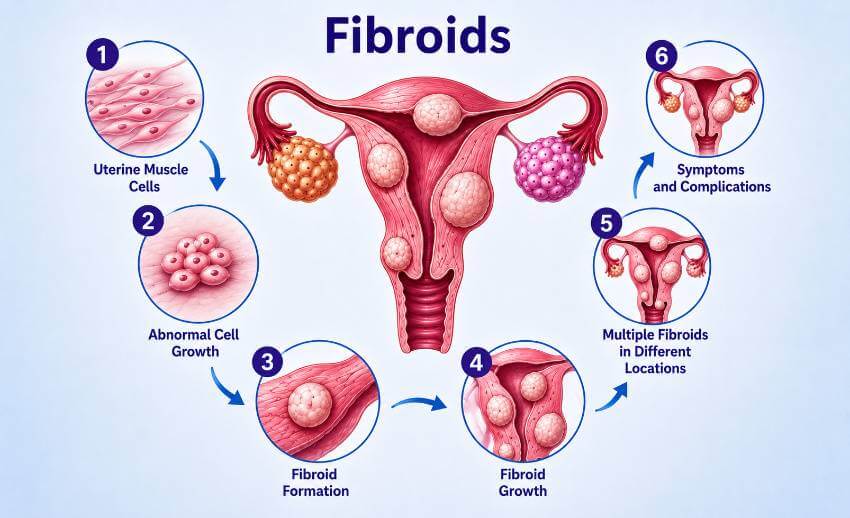
What Are Fibroids?
Fibroids, also called uterine leiomyomas or myomas, are benign tumors made up of smooth muscle and fibrous tissue that develop within the uterus. They are not cancerous and rarely become cancerous. Fibroids can range from microscopic growths to large masses that enlarge the uterus significantly.
Many women may have a single fibroid, while others develop multiple fibroids of different sizes.
Key Facts About Fibroids
- Non-cancerous uterine growths
- Common during reproductive years
- May cause heavy periods
- Can affect fertility in some women
- Often diagnosed during routine scans
- Can be treated medically or surgically
- Minimally invasive treatments are available
Types of Fibroids
The location of a fibroid largely determines its symptoms and treatment options.
Intramural Fibroids
These fibroids grow within the muscular wall of the uterus and are the most common type. They may enlarge the uterus and contribute to heavy menstrual bleeding and pelvic pressure.
Symptoms:
- Heavy periods
- Pelvic discomfort
- Lower abdominal pressure
- Fertility concerns in some cases
Submucosal Fibroids
Submucosal fibroids develop beneath the uterine lining and protrude into the uterine cavity. They are strongly associated with abnormal bleeding and fertility problems.
Symptoms:
- Excessive menstrual bleeding
- Infertility
- Recurrent miscarriages
- Anemia
Subserosal Fibroids
These fibroids grow on the outer surface of the uterus and may become very large.
Symptoms:
- Pelvic pressure
- Frequent urination
- Constipation
- Back pain
Pedunculated Fibroids
Pedunculated fibroids are attached to the uterus by a stalk-like structure.
Symptoms:
- Sharp pelvic pain
- Pressure symptoms
- Twisting of the stalk causing severe pain
Causes of Fibroids
The exact cause remains unknown, but several factors are believed to contribute to fibroid development.
Hormonal Factors - Estrogen and progesterone stimulate fibroid growth. Fibroids often grow during reproductive years and shrink after menopause.
Genetic Factors - Certain genetic changes may increase the likelihood of developing fibroids. Women with a family history are at greater risk.
Growth Factors - Substances that regulate tissue growth may contribute to fibroid formation.
Extracellular Matrix Changes - Changes in uterine tissue structure may encourage fibroid development.
Risk Factors for Fibroids
Women are more likely to develop fibroids if they have:
- Family history of fibroids
- Obesity
- Early menstruation
- Delayed pregnancy
- Hormonal imbalance
- Age between 30 and 50 years
- High estrogen exposure
Symptoms of Fibroids
Symptoms vary depending on size, number, and location.
Common Symptoms
- Heavy menstrual bleeding
- Menstrual periods lasting more than a week
- Pelvic pain
- Pelvic pressure
- Frequent urination
- Difficulty emptying bladder
- Constipation
- Lower back pain
- Pain during intercourse
- Leg pain
Fibroids and Fertility
Fibroids can sometimes interfere with conception and pregnancy.
How Fibroids Affect Fertility
- Distortion of uterine cavity
- Reduced implantation rates
- Fallopian tube blockage
- Increased miscarriage risk
- Reduced IVF success in specific cases
Submucosal fibroids are particularly associated with fertility challenges.
Fibroids and Pregnancy
Many women with fibroids have healthy pregnancies, but some may experience complications.
Possible Pregnancy Risks
- Miscarriage
- Preterm labor
- Placental abnormalities
- Cesarean delivery
- Fetal growth issues
Diagnosis of Fibroids in Rajahmundry
At Pragati IVF Centre, fibroids are diagnosed through comprehensive evaluation.
Pelvic Examination - Initial assessment helps detect uterine enlargement.
Ultrasound Scan
Abdominal Ultrasound - Provides overall uterine assessment.
Transvaginal Ultrasound - Offers detailed visualization of fibroids.
Hysteroscopy - Used to evaluate fibroids inside the uterine cavity.
Laparoscopy - Helps assess fibroids externally and plan treatment.
Fibroid Treatment in Rajahmundry
Treatment depends on symptoms, fertility goals, age, and fibroid characteristics.
Observation
Small asymptomatic fibroids may only require monitoring.
Benefits:
- Avoids unnecessary intervention
- Suitable for mild cases
- Regular follow-up ensures safety
Medical Management
Medications may help control symptoms.
Treatment Goals:
- Reduce bleeding
- Control pain
- Improve quality of life
- Reduce fibroid growth
Laparoscopic Myomectomy
This fertility-preserving surgery removes fibroids while keeping the uterus intact. It is recommended for women planning pregnancy.
Benefits:
- Smaller incisions
- Faster recovery
- Reduced pain
- Better cosmetic outcomes
- Fertility preservation
Hysteroscopic Fibroid Removal
Suitable for submucosal fibroids located inside the uterine cavity.
Advantages:
- No external incision
- Quick recovery
- Improved fertility outcomes
Hysterectomy
Recommended for severe cases when fertility preservation is not required.
Benefits:
- Permanent solution
- Eliminates recurrence risk
Why Choose Pragati IVF Centre for Fibroid Treatment in Rajahmundry?
Pragati IVF Centre is recognized for advanced fertility and gynecology care in Rajahmundry with experienced specialists, comprehensive diagnostics, and minimally invasive surgical expertise.
Experienced gynecologists - Dedicated specialists with extensive experience.
Advanced ultrasound diagnostics - State-of-the-art imaging for accurate diagnosis.
Laparoscopic surgery expertise - Minimally invasive surgical techniques.
Hysteroscopy services - Comprehensive uterine evaluation.
Fertility-focused care - Treatments designed to preserve reproductive potential.
Personalized treatment plans - Tailored according to each patient's needs.
Modern operation facilities - Advanced surgical infrastructure.
Comprehensive women's healthcare - Integrated gynecology services.