

Microfluidics
Male Fertility Microfluidics Treatment at Pragati IVF Hospital in Rajahmundry
Male infertility is a significant factor in nearly 40鈥�50% of infertility cases, and advanced technologies are transforming the way fertility specialists address this challenge. At Pragati IVF Hospital, we offer cutting-edge Microfluidics sperm selection technology, a breakthrough approach designed to enhance sperm quality and improve outcomes in assisted reproductive treatments like IVF and ICSI.
Microfluidics is an innovative technique that mimics the natural selection process of sperm within the female reproductive system. Unlike traditional sperm preparation methods, this advanced technology ensures that only the healthiest, most motile, and genetically intact sperm are selected for fertilization.
What is Microfluidics in Male Fertility?
Microfluidics is a highly sophisticated laboratory technique that uses microscopic channels to separate and select the best sperm cells. The process is based on natural sperm behavior, allowing only the strongest sperm to navigate through tiny pathways, similar to how they would naturally travel in the female reproductive tract
This technique avoids harmful procedures like centrifugation, which can sometimes damage sperm DNA. Instead, microfluidics provide a gentle and efficient method of sperm selection, preserving sperm integrity and improving fertilization potential.
Studies have shown that microfluidic sperm selection can significantly reduce DNA fragmentation and improve sperm motility and morphology, which are critical factors for successful fertilization.
Why Microfluidics is Important in Male Infertility
Male infertility can be caused by various factors such as low sperm count, poor motility, abnormal morphology, or high DNA fragmentation. Traditional sperm selection methods may not always effectively isolate the best sperm, which can impact IVF success rates.
Microfluidics addresses these challenges by:
- Selecting sperm with low DNA damage
- Improving progressive motility
- Enhancing overall sperm quality
- Supporting better embryo development
Research indicates that sperm selected through microfluidic devices often show improved embryo quality and fertilization outcomes.
How Microfluidics Sperm Selection Works
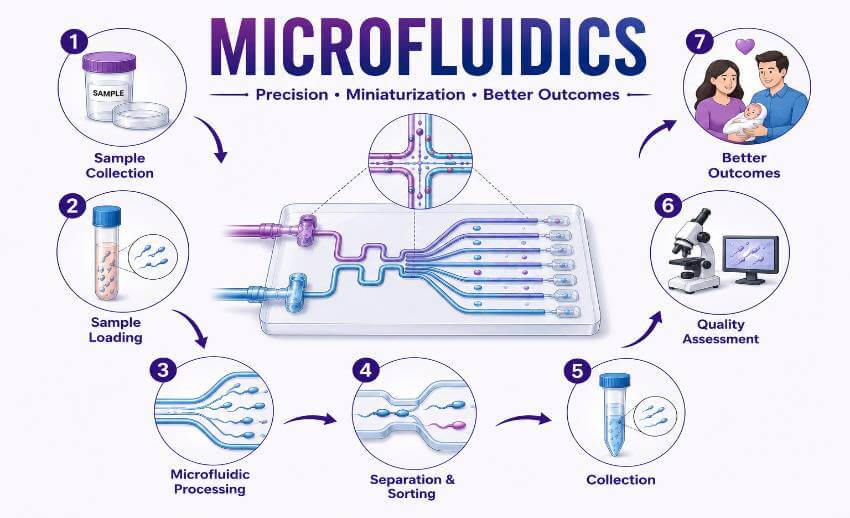
The microfluidics process involves a specially designed chip with microchannels. A semen sample is placed into the device, and sperm naturally migrate through these channels.
Here鈥檚 how it works:
- The semen sample is introduced into the microfluidic chip
- Sperm begin to swim through microscopic pathways
- Only the most active and healthy sperm reach the collection chamber
- Selected sperm are used for IVF or ICSI procedures
This method closely resembles natural sperm selection, ensuring optimal quality without causing oxidative stress or cellular damage.
Benefits of Microfluidics in IVF Treatment
- 1. Improved Sperm Quality
- Microfluidics selects sperm with better motility, morphology, and DNA integrity, which are crucial for fertilization success.
- 2. Reduced DNA Fragmentation
- High sperm DNA fragmentation is a major cause of failed IVF cycles. Microfluidics helps significantly reduce this risk.
- 3. Better Embryo Development
- High-quality sperm leads to improved embryo formation and increased chances of implantation.
- 4. Gentle and Non-Invasive Process
- Unlike conventional methods, microfluidics avoids centrifugation, reducing mechanical stress on sperm cells.
- 5. Higher Chances of Pregnancy
- While research shows mixed statistical outcomes, many studies suggest improved clinical outcomes and reduced miscarriage risks with microfluidics.
Who Can Benefit from Microfluidics Treatment?
Microfluidics is particularly beneficial for:
- Men with high DNA fragmentation index (DFI)
- Couples with repeated IVF failures
- Cases of poor embryo quality
- Men with low sperm motility or abnormal morphology
- Couples experiencing recurrent miscarriages
Fertility specialists at Pragati IVF carefully evaluate each case to determine whether microfluidics is the right option.
Microfluidics vs Conventional Sperm Selection
Traditional sperm preparation methods like swim-up or density gradient centrifugation rely on mechanical processes that may expose sperm to stress. Microfluidics, on the other hand, provides a more natural and efficient alternative.
- Feature
- Conventional Methods
- Microfluidics
- Sperm Selection
- Mechanical
- Natural migration
- DNA Integrity
- Moderate
- High
- Stress on Sperm
- Higher
- Minimal
- Embryo Quality
- Variable
- Improved
- Process Type
- Centrifugation
- Gentle microchannels
Microfluidics is rapidly becoming a preferred option in modern fertility treatments due to its precision and effectiveness.
Role of Microfluidics in IVF and ICSI Success
Microfluidics play a critical role in enhancing outcomes in assisted reproductive techniques such as IVF and ICSI. By selecting the most viable sperm, this method improves the chances of successful fertilization and healthy embryo development.
Microfluidic sperm sorting devices are specifically designed to isolate sperm with intact DNA and high motility, reducing the risk of injecting poor-quality sperm during ICSI procedures.
Although ongoing research continues to evaluate long-term outcomes, microfluidics is widely recognized as a promising advancement in fertility science.
Why Choose Pragati IVF Hospital for Microfluidics Treatment?
- Experienced fertility specialists
- State-of-the-art embryology lab
- Advanced sperm selection technologies
- High success-oriented approach
- Compassionate patient care
Our team ensures that every couple receives customized treatment tailored to their unique fertility needs.